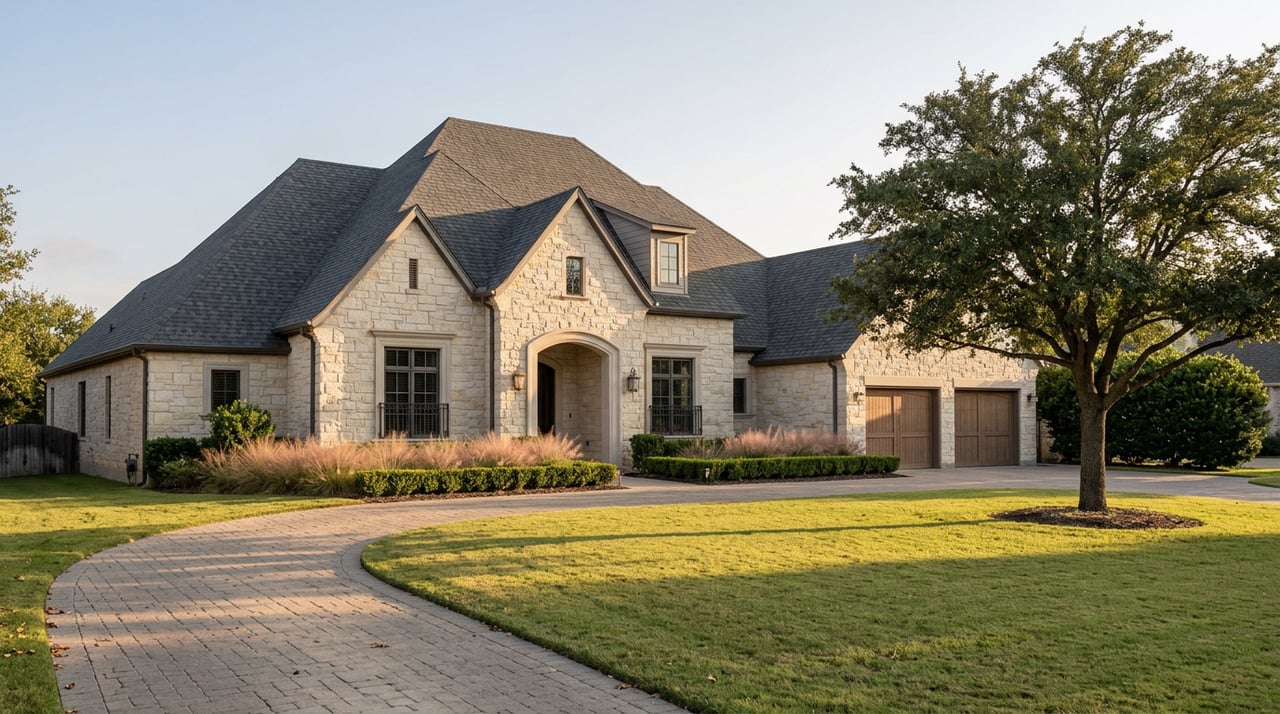
Ask most buyers what a fresh subdivision does to a market and the answer comes fast: more supply, more competition among sellers, softer prices. Fair Oaks Ranch is about to test that assumption in a way local buyers have not seen in years, because for more than a decade almost nothing new was built here at all.
That drought is ending. Two subdivisions, Post Oak and Oak Bend Estates, are finally moving dirt in a city that spent twelve years locked in a land dispute over a single 345-acre parcel. But the way this new inventory is built and financed means it will not behave like the fresh competition a textbook would predict. Its financing structure also adds an ongoing assessment buyers should include when comparing ownership costs.
The Twelve Years Nobody Built Here
The parcel sits off Ammann Road, directly across from the Stone Creek Ranch subdivision, and it has carried three names since 2013: The Reserve at Fair Oaks Ranch, then Fair Oaks Meadows, then finally Post Oak. The original 2013 proposal called for more than 600 homes on lots averaging around half an acre, anchored by a private wastewater treatment plant. That plan sat tangled in legal challenges and changes of ownership for more than a decade, unresolved while the rest of the city kept selling resale homes with almost no new subdivision inventory to compete against.
The effect shows up in the permit numbers. At the city's January 2026 State of the City address, officials reported that Fair Oaks Ranch issued only 44 new home permits in 2025, down from years when the city saw as many as 200 annually, according to Community Impact's coverage of the address. For a decade, a buyer specifically looking for new construction in Fair Oaks Ranch was mostly out of luck. Nearly everything for sale had already been lived in once.
What Finally Got Approved, and What Didn't
City Council approved an amended development agreement in May 2025 that looked nothing like the original 2013 concept. Here is what changed on paper:
| 2013 Original Plan (The Reserve) | 2025 Amended Plan (Post Oak) | |
|---|---|---|
| Homes | About 635 to 645 | 278 approved by council; the city's live project page currently lists 227 platted lots |
| Minimum lot size | Averaged roughly half an acre | One acre minimum |
| Wastewater | Centralized private treatment plant | Individual on-site septic |
| Infrastructure financing | Not applicable | Public Improvement District, about $60 million, as estimated in the Post Oak PID petition, repaid by future homeowners, as the City of Fair Oaks Ranch explains |
| Water demand (LUEs) | Based on original higher-density zoning | Reduced by nearly 60 percent |
Even that 278-lot figure kept shrinking as the project moved through platting. The city's own Post Oak Development page now lists 227 lots for the approved plan, a gap worth sitting with for a moment. It tells a buyer something concrete about how this city is handling growth: council is not maximizing unit count once the agreement is signed, it keeps trimming density lot by lot through the platting process.
Why This Isn't the Supply Relief It Looks Like
A one-acre minimum lot with custom home construction lands in roughly the same price tier as the existing luxury stock in neighborhoods like The Fairways, Stone Creek Ranch, and Setterfeld Estates, not below it. Oak Bend Estates, a second community arriving from Sitterle Homes, is likewise positioned around Hill Country-inspired custom design rather than entry-level product.
For a buyer comparing Fair Oaks Ranch against Boerne or Stone Oak, the number worth tracking is not how many new homes are coming. It's where those homes land on the price ladder. A couple hundred new one-acre custom lots does not create competition for a $500,000 buyer. It adds inventory at the top of the market, in the exact price band where Fair Oaks Ranch was already thin. The twelve-year freeze did not just limit total supply, it limited supply broadly, and the fix arriving now only refills one shelf.
The Line Resale Homes Don't Carry
Another part of the comparison is how this new inventory gets paid for. As the Boerne Star reported, City Manager Scott Huizenga said:
"This resolution gives us local control over a critical area of land that would otherwise have developed outside of our oversight."
The mechanism behind that control is the Public Improvement District the city created in July 2025, according to Citizen Portal, to fund the roughly $60 million in roads, drainage, and water lines the subdivision needs. City documents are specific on this point: the developer covers up-front capital costs through the PID and through impact fees, and only homeowners who buy inside the Post Oak boundary repay that cost over time through special assessments. The general fund does not touch it, and neither does a buyer purchasing a resale home half a mile away in Stone Creek Ranch.
That distinction matters at the negotiating table. A Post Oak buyer's true carrying cost is the mortgage payment plus property tax plus a PID assessment. A resale buyer in an established Fair Oaks Ranch section pays property tax and nothing else tied to that $60 million in infrastructure. Comparing two homes at the same list price without accounting for that difference is comparing two different monthly numbers wearing the same sticker.
What to Confirm Before Writing an Offer
If a new-construction lot in Post Oak or a comparable PID-financed community is on the table, a few questions belong in the contract discussion before earnest money moves:
- Ask for the district's current service and assessment plan and how many years remain on any outstanding bonds
- Get the annual assessment amount in writing rather than a verbal estimate from a sales office
- Confirm whether the assessment is a flat per-lot charge or tied to assessed value, since that changes how it moves over time
- Have the title company itemize the PID assessment separately from standard property tax so it's visible at closing, not buried in a combined escrow line
- Run the full monthly cost, mortgage plus tax plus assessment, against a resale home in an older Fair Oaks Ranch section before deciding new construction is the better value
One more practical detail worth knowing if Post Oak is on a shortlist: as part of the development agreement, the developer is contributing to softening a sharp curve on Ammann Road near Rolling Acres Trail as that road gets reconstructed. Access into the subdivision runs through that stretch, so it's a fair question to ask a builder how construction traffic and the road work are being sequenced.
The Real Takeaway
Fair Oaks Ranch is building again after more than a decade of standstill, and that is a meaningful shift for anyone who assumed the city's inventory would stay frozen in place. But new construction here is not the deal a buyer might expect from a market finally loosening up. It is scarce, high end product with a financing structure that adds a real, ongoing cost to include in resale comparisons. Knowing that before an offer goes in is the difference between comparing two houses and comparing two very different monthly obligations.
Whether the right move is a Post Oak lot, an Oak Bend Estates home, or a resale property in one of Fair Oaks Ranch's established sections depends on how that math works for a specific budget and timeline. Binkan Cinaroglu works with buyers across Fair Oaks Ranch, Boerne, and the surrounding Hill Country who want that comparison run correctly before they sign anything. Request a private consultation to walk through what a specific property, new or resale, actually costs to own.
This article is general information, not legal, tax or financial advice. Consult a qualified professional about your situation.